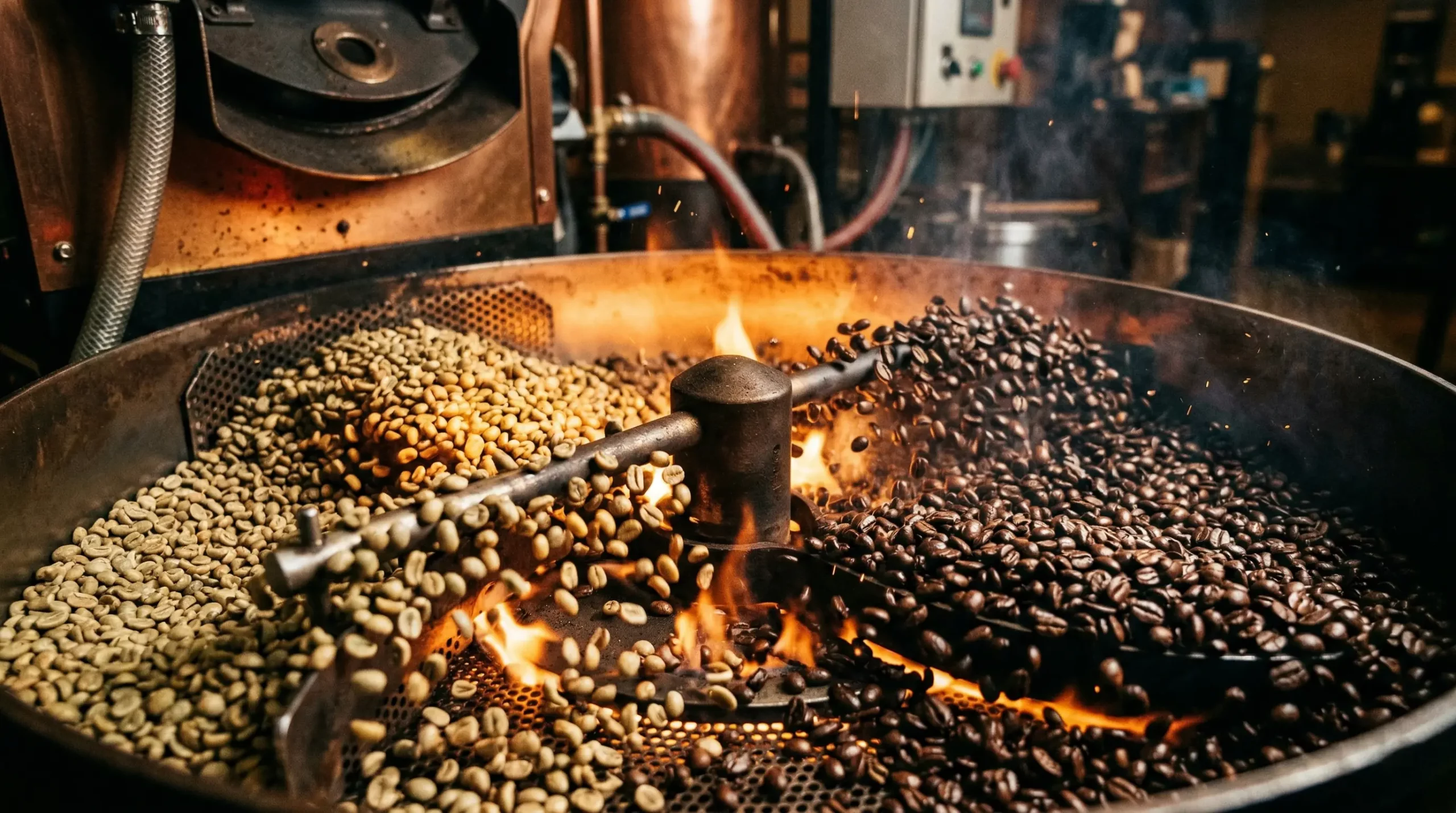
From Green Seed to Dark Magic: A Look Inside the Roasting Drum
The alarm goes off. It’s dark outside, the house is quiet, and the rest of the world is deeply asleep. For most, this is the middle of the night, but for you, it’s the start of the watch. You step into the kitchen, grab your favorite mug, and start the brewing process. As the rich, complex aroma fills the room, it brings a moment of absolute clarity before the uniform goes on and the radio starts chattering.
You know the end result—that perfectly balanced, deeply comforting cup of Watch Call Coffee. But have you ever stopped to think about the journey those beans took to get to your kitchen counter?
The transformation of a coffee bean from a dense, grassy seed to the deeply aromatic, perfectly roasted product you rely on is nothing short of alchemy. It is a process that requires absolute precision, a deep understanding of thermodynamics, and an artisan’s touch. At Watch Call Coffee, we brought our roasting in-house because we wanted total control over this exact process. We wanted to ensure that every single batch meets the high standards required by the men and women who serve our communities.
Today, we are pulling back the curtain. We’re taking you off the post and into the roastery to witness the incredible journey from green seed to dark magic.
Part I: The Unseen Origins
Before we even turn on the roaster, we have to understand what we are working with. The term “coffee bean” is actually a bit of a misnomer. What we roast are the seeds of the coffee cherry, a vibrant red or yellow fruit that grows on shrubs in the “Coffee Belt”—a band around the equator characterized by high altitudes, rich soil, and specific climate conditions.
The Raw Recruit: The Green Bean
When coffee arrives at our facility, it looks nothing like the dark, oily beans you are used to seeing. Raw, un-roasted coffee is referred to as “green coffee.”
If you were to hold a handful of green coffee, you’d immediately notice a few things:
- The Color: They range from a pale, washed-out jade to a grayish-blue, depending on where they were grown and how they were processed.
- The Density: They are incredibly hard, almost like tiny pebbles. If you tried to put green coffee through your home grinder, you would likely break the machine.
- The Scent: There is absolutely no “coffee” smell. Instead, green coffee smells agricultural. It smells like sweet hay, fresh grass, or dried peas.
At this stage, the green bean is completely locked up. All the potential for flavor, acidity, body, and aroma is trapped inside that dense, cellular structure. The bean is like a raw recruit on day one of the academy—full of raw potential, but needing the crucible of pressure and heat to reveal its true character.
Part II: Entering the Crucible
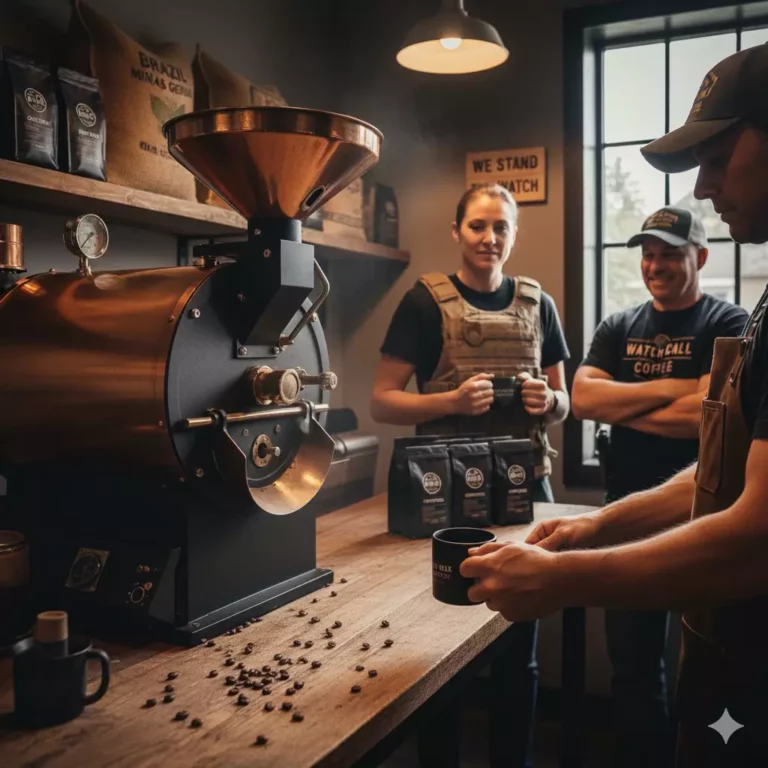
The magic begins the moment the green beans are dropped into the roasting drum. Modern roasting is an exact science. At Watch Call Coffee, we utilize precision equipment that allows us to control the environment with incredible accuracy. There is no room for guesswork when you are crafting a product meant for those who demand consistency and reliability.
The Drying Phase: Turning Up the Heat
When the room-temperature green beans hit the pre-heated drum, the temperature inside the roaster drops sharply before catching and beginning to climb. This is known as the “turning point.”
For the first few minutes, the beans absorb a massive amount of heat. Green coffee typically contains between 10% to 12% moisture. Before the beans can actually begin to roast and develop flavor, this water must be boiled off.
The Sensory Shift: During the drying phase, the grassy smell of the green beans begins to change. The roastery fills with a scent that is incredibly comforting—it smells almost exactly like baking bread or steaming oats. The beans themselves transition from pale green to a warm, golden yellow.
This phase requires careful monitoring. If the heat is applied too aggressively, the outside of the bean will scorch while the inside remains raw and grassy. If the heat is too low, the coffee will “bake,” resulting in a flat, lifeless cup. It requires the same steady, measured approach you take when assessing a complex situation on the job—too fast leads to mistakes, too slow leads to lost opportunities.
Part III: The Chemistry of Flavor
As the moisture dissipates, the real transformation begins. The beans transition from endothermic (absorbing heat) to exothermic (generating their own heat). This is where the complex chemistry of coffee roasting takes center stage.
The Maillard Reaction
Around 300°F (150°C), the beans turn a light brown. This color change is driven by the Maillard reaction, the same chemical process that causes a steak to brown on a grill or a loaf of bread to develop a golden crust.
During the Maillard reaction, the natural sugars and amino acids inside the coffee bean begin to break down and interact. This incredibly complex chain reaction creates hundreds of new volatile aromatic compounds. This is the exact moment when the “soul” of the coffee is built.
The roastery begins to smell less like baking bread and more like toasted nuts, warm spices, and rich caramel. The beans are expanding, shedding their outer skin (known as chaff), and preparing for the most critical moment of the roast.
Caramelization
As the temperature continues to rise past 338°F (170°C), the Maillard reaction slows down, and caramelization takes over. The complex sugars inside the bean begin to break down, deepening the brown color and creating sweet, nutty, and slightly bitter flavor notes.
This is a delicate balancing act. We want to caramelize the sugars enough to bring out the rich, satisfying body of the coffee, but if we push it too far, those sugars will completely carbonize, resulting in an ashy, burnt taste. It is all about finding the perfect equilibrium.
Part IV: The Symphony of the Crack
In the roasting world, we don’t just rely on digital thermometers and software profiles; we rely heavily on our senses. As the beans rapidly expand under the intense heat and pressure, they provide an acoustic signal that lets us know exactly where we are in the process.
First Crack: The Breaking Point
As the internal temperature of the bean approaches 385°F (196°C), the pressure from water vapor and carbon dioxide building up inside the bean becomes too great. The cellular structure of the bean literally fractures.
This produces an audible popping sound, very similar to popcorn popping in a microwave. We call this the First Crack.
First Crack is the cinematic moment of roasting. The beans double in size, they become significantly lighter in weight, and the distinct, unmistakable aroma of freshly roasted coffee absolutely floods the room.
Once First Crack begins, the clock is ticking. The roast has officially entered the “Development Phase.”
Part V: The Development Phase
The Development Phase is the critical window of time between the start of First Crack and the moment we pull the beans out of the roaster. This phase dictates whether a coffee will be a bright, fruit-forward light roast or a bold, chocolatey dark roast.
Every single second matters here.
Crafting the Profile
- Light Roasts: If we stop the roast shortly after First Crack finishes, we are left with a light roast. These beans are highly dense, light brown, and retain most of the original characteristics of the farm they were grown on. You will taste bright acidity, floral notes, and distinct fruit flavors.
- Medium Roasts: If we allow the beans to develop a bit longer, the sugars continue to caramelize. The acidity mellows out, and the body of the coffee becomes heavier. This is where we find beautifully balanced notes of milk chocolate, toasted almonds, and brown sugar.
- Dark Roasts and the Second Crack: If we keep pushing the temperature, we approach a second audible milestone: Second Crack. This sounds less like popcorn and more like the snapping of Rice Krispies. The beans are now a deep, dark brown. The cellular walls are breaking down further, forcing the natural oils to the surface of the bean. Dark roasts are characterized by heavy body, low acidity, and bold flavors of dark chocolate, molasses, and subtle smokiness.
Deciding when to end the roast is an exercise in strict discipline. We have established Standard Operating Procedures for every single origin we roast. We know exactly what temperature and time yield the best results for our specific audience, and we adhere to those parameters relentlessly.
Part VI: The Drop and the Cool Down
When the beans have reached the exact desired profile, it is time for “The Drop.”
We open the door to the drum, and a cascade of hot, brown beans spills out into the cooling tray. This is always a visually stunning moment, accompanied by a massive plume of aromatic smoke and steam.
However, the job isn’t done just because the beans are out of the drum. At this moment, the beans are roughly 400°F. If left alone, they would continue to roast themselves from the inside out, ruining the carefully crafted flavor profile.
We must halt the cooking process immediately.
The cooling tray utilizes a powerful fan that draws room-temperature air down through the bed of coffee, while mechanical agitator arms sweep the beans in continuous circles to ensure even cooling. Within minutes, the beans are brought down to room temperature, locking the flavor profile safely into place.
Part VII: Patience Before the Pour
It is incredibly tempting to take those freshly cooled beans, grind them up immediately, and brew a pot. But, just like a high-intensity situation requires a moment of debriefing and decompression, coffee needs time to rest.
The Degassing Process
During the intense heat of the roasting process, a massive amount of carbon dioxide is created inside the cellular structure of the bean. When the coffee is dropped into the cooling tray, it immediately begins to release this CO2.
If you were to brew coffee mere minutes after it was roasted, the rapid escape of that CO2 during the brewing process would create a chaotic, bubbly mess. The gas repels water, preventing the even extraction of flavor compounds. The resulting cup would taste sharp, metallic, and generally unbalanced.
We allow our coffee to rest—a process known as degassing. Over the next few days, the CO2 naturally dissipates, and the volatile flavor compounds settle and stabilize. This resting period ensures that when you open a bag of Watch Call Coffee, you are getting a product that is perfectly primed and ready to deliver a smooth, consistent experience.
Part VIII: From the Roastery to the Watch
The journey from a dense, green seed harvested thousands of miles away to the rich, dark brew in your mug is a testament to the power of transformation. It requires heat, pressure, precise timing, and an unwavering commitment to quality control.
When we brought our roasting operations in-house, we did so with a specific mission in mind. We know the realities of your profession. We know the mental toll of a 16-hour shift, the physical demand of walking the tier, and the absolute necessity of staying sharp when the rest of the world is asleep.
You don’t have time for a sub-par cup of coffee. You need something reliable, crafted with the same level of dedication and attention to detail that you bring to your duty every single day.
Understanding the science and the art behind the roasting drum is about more than just coffee trivia. It is about recognizing the intention behind the product. Every batch we roast is monitored, measured, and meticulously crafted to ensure that when you take that first sip in the quiet moments before your shift begins, you are drinking something exceptional.
So, the next time you hear the alarm, the next time you prep your gear, and the next time you pour that dark magic into your mug, take a second to appreciate the journey.
Stay sharp. Stay safe. And enjoy the brew.